
2026 One Seattle Zoning Code Update - Phase One
Seattle has enacted the first phase of its zoning code update in response to HB 1110 — the statewide mandate requiring jurisdictions to support middle housing. This first phase establishes new Neighborhood Residential zoning rules and serves as the foundation for subsequent zoning updates that will roll out in future phases. The Phase One regulations take effect January 21, 2026.
Middle Housing refers to residential types that fall between single-family homes and large apartment complexes — such as duplexes, townhouses and stacked flats. The intent is to increase density, diversify housing options, and create more affordable pathways to homeownership.
Neighborhood Residential zones have been consolidated
Every residential lot can host at least 4 dwelling units
Base height limits have increased to 32 feet
There are new zoning bonuses based on density
But the path to adoption has been anything but simple. The rollout of this legislation has involved legal challenges, multiple drafts, interim rulings, and substantial revisions. As a result, it can be difficult to understand which rules are currently in force and how they relate to future zoning phases — that’s where we come in.
We’ve put together a clear breakdown below. Read on for a summary of how rules have changed across Neighborhood Residential zones, updates to ADU regulations that may have flown under the radar, and some context on what this first phase signals for Seattle’s longer-term zoning framework.
New design standards and amenity area requirements
NR Zones have adopted the points-based tree system
ADUs have lost many of their zoning advantages
Zoning updates will continue to be implemented in phases
Stacked Flats and Type A units gain major new bonuses










The following information relates to lots in neighborhood residential zones. Underlined sections indicate new or updated provisions.
ZONING CLASSIFICATIONS 23.30.010
Simplified residential categories
NR1, NR2 and NR3 zones have been consolidated into a single NR Zone (Neighborhood Residential). The previous categories referred to minimum lot sizes, but this distinction has now been removed.
Most RSL zones will transition to LR1 zones. The treatment of non-(M) suffix RSL parcels under the new code is not yet explicitly documented and should be confirmed via official rezoned maps.
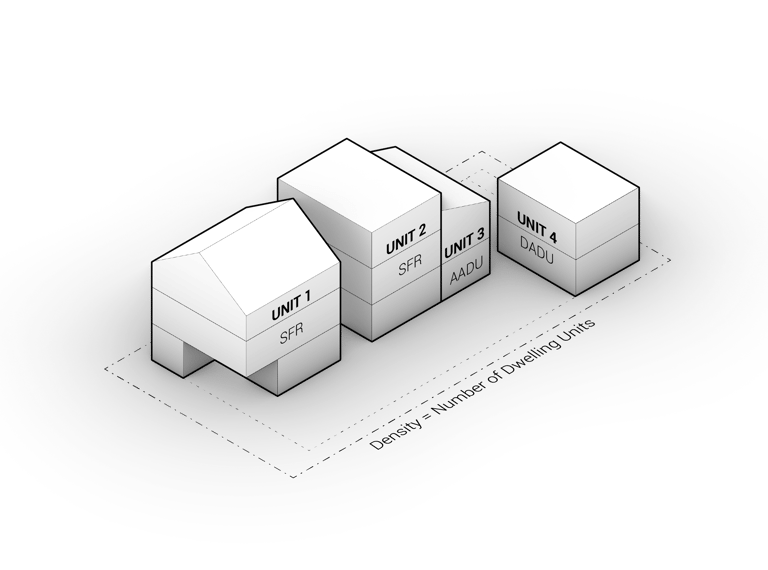
DENSITY 23.44.060
How many homes you can build on your lot
Allowable density is the greater of the following applicable calculations:
Fixed unit allowances
4 dwelling units on lots without ECAs
6 dwelling units if within a 1/4-mile walking distance of a major transit stop
6 dwelling units if at least two affordable principal dwelling units are provided
Lot-area-based allowances
1 unit per 1,250 SF of lot area
1 unit per 650 SF for cottage developments in Frequent Transit Service areas
1 unit per 600 SF for stacked flats
1 unit per 500 SF for stacked flats that meet certain tree-retention or green criteria
(Previously in NR zones, only one single-family dwelling was allowed per lot, with up to two ADUs under certain circumstances. In RSL zones, one principal dwelling unit was allowed per 2,000 SF per lot area with up to one ADU)
Notes and Exceptions
When calculation of the number of dwelling units allowed results in a fraction of a unit, any fraction over 0.85 constitutes one additional unit.
Environmentally critical areas shall not be counted for the purpose of calculating maximum density
For lots containing Environmentally Critical Areas, density minimums are not applicable and density should instead be calculated per section 23.44.060.C.4.
Type A Accessible Units do not count toward density limits
Both Primary Dwelling Units and Accessory Dwelling Units count toward density limits
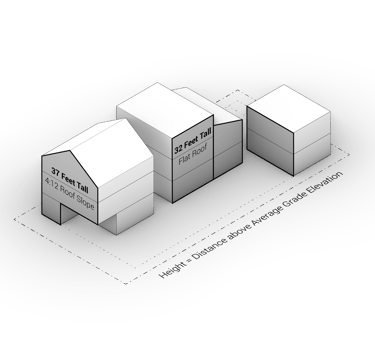
HEIGHT 23.44.070
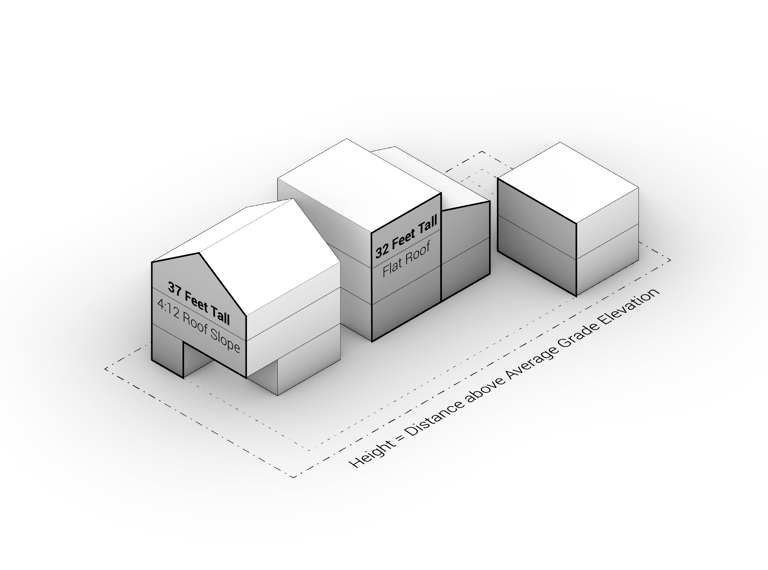
How tall your structure can be
32 feet above the average grade level
(or 42 feet for developments with three or more principal dwelling units
and a front setback of at least 20 feet)
(or 42 feet for Stacked Flats that meet certain requirements)
(Previously, the height limit was 30 feet)
Notes and Exceptions
The ridge of a pitched roof can extend 5 feet above the maximum height limit within a 4:12 sloped envelope. Shed and butterfly roofs cannot extend above the maximum height limit.
Open rails and planters can extend 4 feet above the maximum height limit or to the allowable height of a pitched roof.
Chimneys can extend 4 feet above the allowable roof ridge
Green roofs that have a planted coverage of at least 50% may extend up to 24 inches above the allowable height limit.
Roofs enclosed by a parapet may exceed the maximum height by up to 4 feet, provided that the highest elevation of the roof surface does not exceed 75 percent of the parapet height, and the lowest elevation of the roof surface does not exceed the applicable maximum height.
FLOOR AREA RATIO 23.44.050
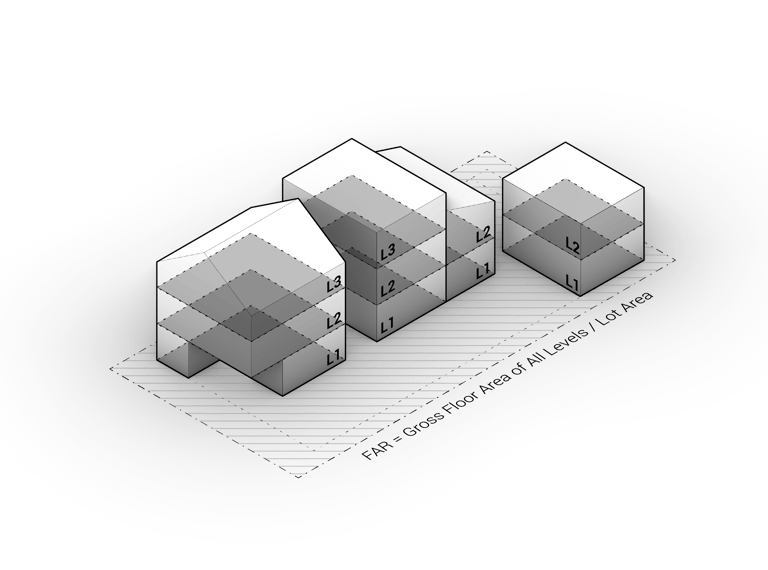
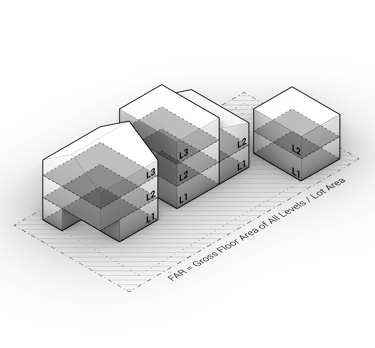
Ratio of the total floor area of all levels to the lot area
0.6 if density is lesser than 1 unit / 4000 SF
0.8 if density is between 1 unit / 4000 SF - 1 unit / 2201 SF
(or 1.0 for qualified Stacked Flats near schools*)
1.0 if density is between 1 unit / 2200 SF - 1 unit / 1601 SF
(or 1.2 for qualified Stacked Flats near schools)
1.6 if density is greater than 1 unit / 1600 SF
(or 1.8 near Frequent Transit Areas with Green Spaces)
(or 1.8 for Stacked Flats)
(or 2.0 for Stacked Flats meeting certain tree retention or green criteria)
(or 2.0 for qualified Stacked Flats near schools*)
(Previously, the FAR limit in NR zones was 0.5, regardless of unit density)
Notes and Exceptions
Lots less than 5000 SF can select the greater of the above ratio or 2500 SF gross floor area
The following are not counted in FAR calculations: balconies, patios, and decks that are not used for common circulation; underground stories and parts of stories that are no more than 4 feet above grade; common wall separating attached dwelling units; Type A accessible units
*A qualified stacked flat has at least 25% units with three or more bedrooms and a minimum area of 1050 SF. It also must be located within 1/4 mile of an elementary or secondary school.
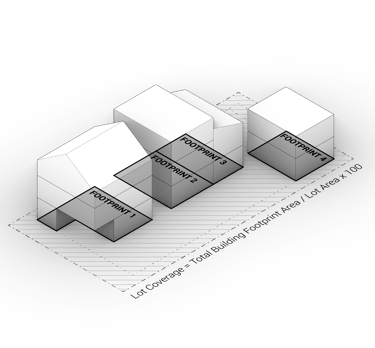
LOT COVERAGE 23.44.080
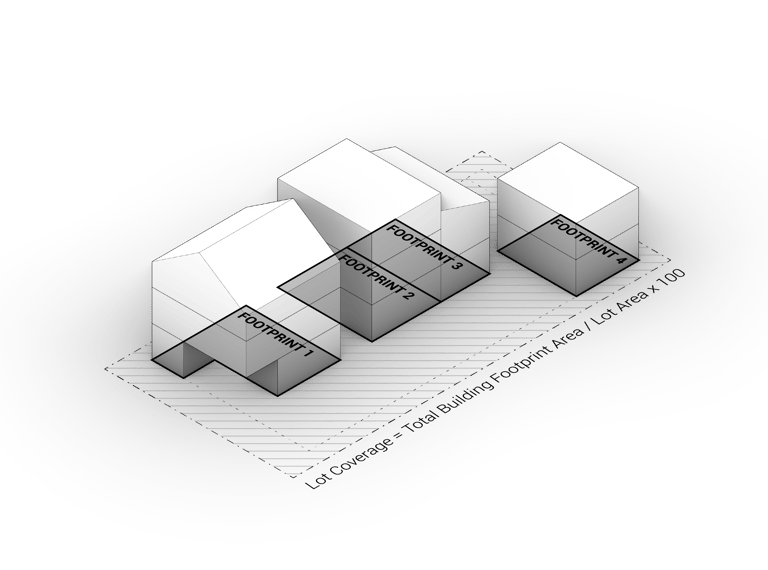
How much of your lot is covered by the building footprint(s)
50% of lot area (excluding environmentally critical areas)
(or 60% for Stacked Flats)
(or 60% for Cottage Developments in Frequent Transit Service Areas)
(Previously, the lot coverage limit in NR1, NR2, and NR3 zones was 35%)
Notes and Exceptions.
The following are not counted in lot coverage calculations: Access Bridges, Ramps, Decks (less than 36” above existing grade), Fences and Freestanding Walls, Underground Structures, Eaves and Gutters (36” projection max.) Solar Collectors, Swimming Pools, Area of any Type A accessible units, Area of any structure with up to 10 stacked dwelling units.
The previous alley exemption for lot coverage has been removed
SETBACKS 23.44.090
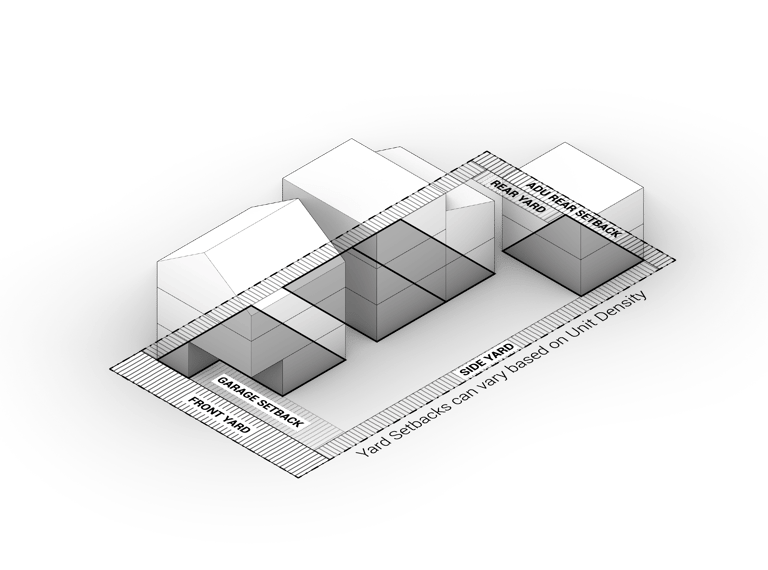
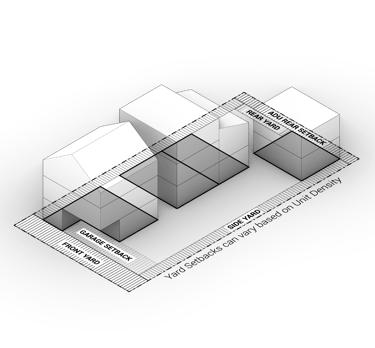
How far your building(s) must be from the property lines
Front:
15 feet for lots with one or two dwelling units
10 feet for lots with three or more dwelling units
(Previously, the front yard setback limit was 10’ in RSL zones, 20’ in other NR zones)
Rear:
15 feet on lots with one or two dwelling units
10 feet on lots with three or more dwelling units
5 feet for ADUs
0 feet for lots abutting an alley
(Previously, the rear yard setback was 10’ in RSL zones, 25’ in NR zones)
Side:
5 feet average, 3 feet minimum
(or 3 feet for lots under 5000 SF within frequent transit service areas)(Previously, the side yard setback was 5' in NR zones)
Notes and Exceptions
Parking and garages shall not be located within 20 feet of a front lot line. Exceptions are provided in 23.44.160.D
External architectural details (chimneys, eaves, cornices, etc.) can extend up to 2 feet into a required yard, provided they are no closer than 3 feet to any lot line
Unenclosed porches or steps less than 4 feet above grade can extend up to 5 feet of a street lot line and 3 feet of a side lot line.
Covered porches or steps may extend up 5 feet of any lot line, provided that the area in the setback is less than 60 square feet, and the roof is less than 15 feet above grade and not used as a deck.
Bay windows less than 10 feet in width can extend 2 feet into required yards.
Ramps and other barrier free access facilities are permitted in required yards
Fences 6 feet or less in height are permitted in required yards, with exceptions.
Unenclosed structures no higher than 18 inches above grade are permitted in required yards
Heat pumps, EV charging devices, and other similar mechanical equipment are permitted within 3 feet of any lot line
DESIGN STANDARDS 23.44.140
Prescribed form requirements
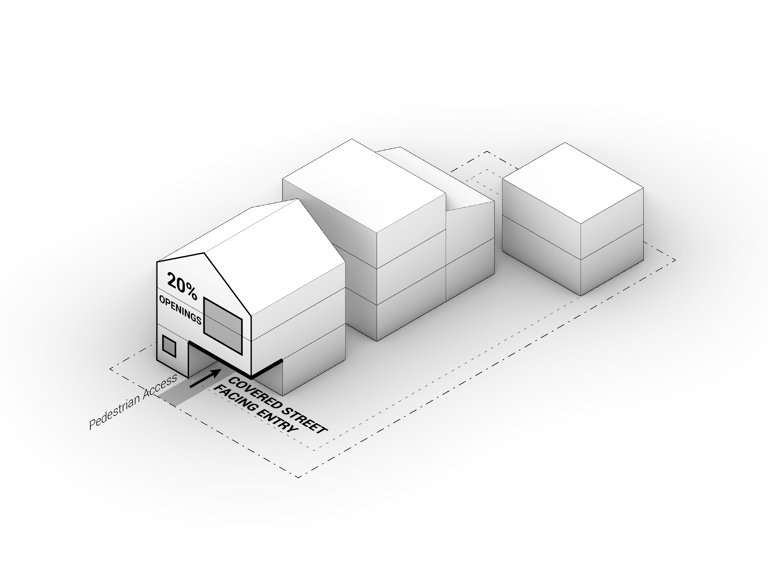
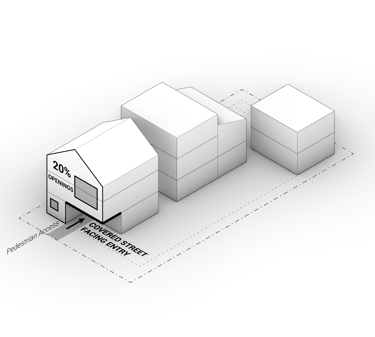
Pedestrian Access
Each dwelling unit shall have pedestrian access at least 3 feet in width to the sidewalk or, if no sidewalk exists, the front lot line.
This pedestrian access may be shared or private.
This pedestrian access may be part of a driveway.
Entrances
Each structure with a street-facing facade shall have a pedestrian entry on that street-facing facade
Required pedestrian entry on street-facing facades shall have weather protection, such as a covered porch, canopy, recessed entry, or similar feature, measuring at least 3' x 3' (increased to at least 6' x 4' in depth for stacked dwelling units)
For structures or dwelling units with multiple street-facing facades, a pedestrian entry is required on only one of the street-facing facades.
Windows and Doors
At least 20 percent of the area of each street-facing facade shall consist of windows and/or doors
If front and side facades are street-facing, the two facades shall be combined for the purpose of this calculation.
Windows count only if they are transparent
Windows composed of garage doors and doors to utility and service areas do not count
(Previously, there were no design standards for NR zones)
AMENITY AREA 23.44.110
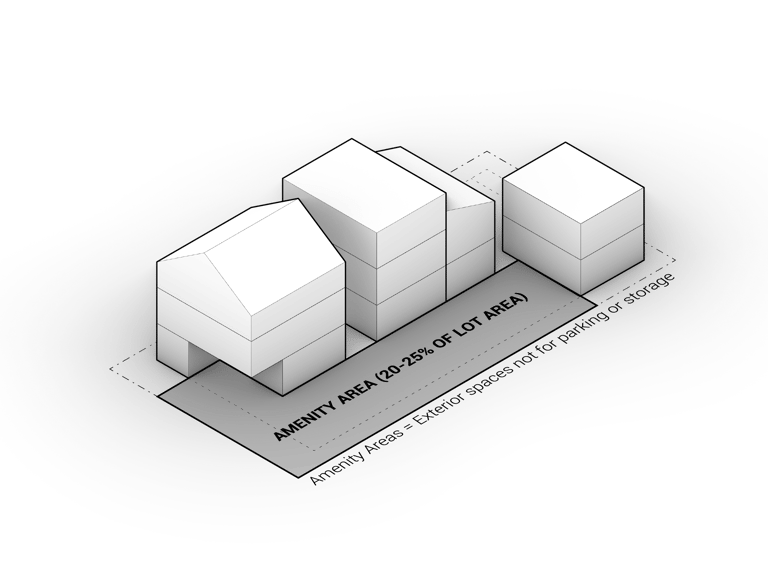
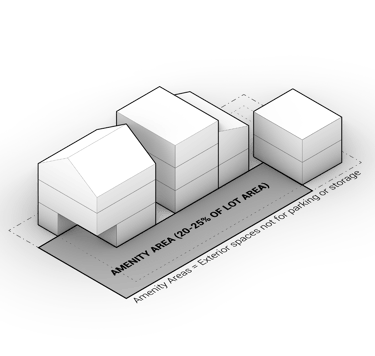
Exterior spaces for resident use
20% of lot area for attached and detached dwelling units
25% of lot area for stacked dwelling units
(or 20% if every above grade unit has a balcony)
(Previously, there were no amenity area requirements for NR zones)
Notes and Exceptions
All dwelling units shall have access to either a common or private amenity area.
Amenity area shall not be enclosed within a structure.
Each amenity area shall be at least 120 square feet in area and have a minimum width and depth of 8 feet, except for balconies, which shall be at least 30 square feet in area and have a minimum width and depth of 4 feet.
The following features are not allowed in amenity areas:
Vehicular parking areas, vehicular access easements, and driveways
Required bike parking
Solid waste and recyclable material storage area
Enclosed structures
Areas in environmentally critical areas and their buffers may count toward amenity areas
No amenity area is required when one of the following conditions is true:
Only one new dwelling unit is added to a dwelling unit existing as of January 1, 1982
Only one new dwelling unit is added to a multifamily residential use existing as of October 10, 2001
A development retains a Tier 2 Tree
A development achieves a tree point score that would result in a 10% canopy coverage for the site at tree maturity.
TREE REQUIREMENTS 23.44.120
Rules to protect, preserve, and expand the urban forest
1 point / 500 SF if density is lesser than 1 unit / 4000 SF
1 point / 600 SF if density is between 1 unit / 4000 SF - 1 unit / 2201 SF
1 point / 675 SF if density is between 1 unit / 2200 SF - 1 unit / 1601 SF
1 point / 750 SF if density is greater than 1 unit / 1600 SF
Points are awarded as followed:
Newly Planted Deciduous Tree:
Small: 1.00 point
Small/Med: 2.00 point
Med/Large: 3.00 point
Large: 4.00 point
Newly Planted Evergreen Tree:
Small: 1.25 point
Small/Med: 2.50 point
Med/Large: 3.75 point
Large: 5.00 point
Preserved Existing Deciduous Tree
Small: 0.4 point per inch of diameter
Small/Med: 0.8 point per inch of diameter
Med/Large: 1.2 point per inch of diameter
Large: 1.6 point per inch of diameter
Preserved Existing Evergreen Tree
Small: 0.5 point per inch of diameter
Small/Med: 1.0 point per inch of diameter
Med/Large: 1.4 point per inch of diameter
Large: 1.8 point per inch of diameter
In addition, street trees are required for developments that would add one or more principal dwelling units on a lot
Notes and Exceptions
Existing trees shall be measured 4.5 feet above the ground
Newly planted trees must meet the following minimum requirements:
Deciduous, with one trunk: 1.5 inches in diameter, measured 6 inches above the ground
Deciduous, multi-stemmed: 6 feet tall, three stems minimum
Evergreen: 4 feet tall
New trees shall not be planted as follows:
Small species: within 2 feet of dwelling unit
Small/medium species: within 4 feet of dwelling unit
Medium/large species: within 6 feet of dwelling unit
Large species: within 8 feet of a dwelling unit
All trees: within 2 feet of a sidewalk located in a right-of-way
Street trees requirements may be exempted per 23.44.120.G.2 and 23.53.015
ACCESSORY DWELLING UNITS 23.42.022 (New Section)
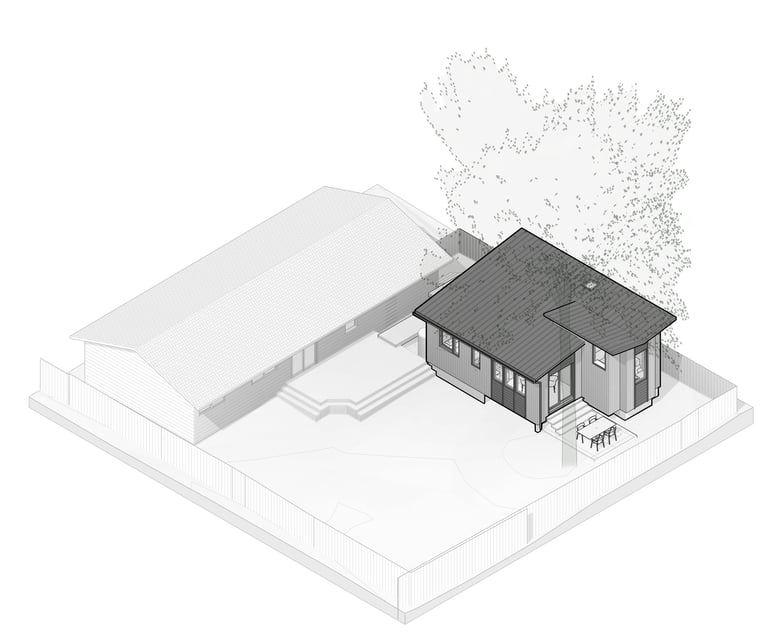
Secondary housing units on the same lot as a primary residence
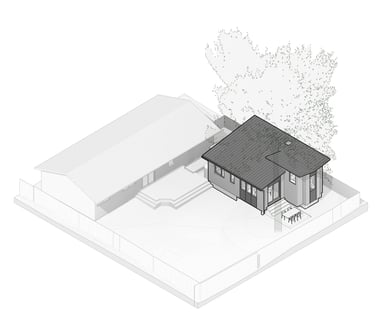
Regulations regarding Accessory Dwelling Units have been relocated to a new standalone section 23.42.022 as part of an earlier legislative response to HB1337.
Although modest new flexibilities were added, the allowance of multiple primary residences on a single lot has effectively reduced many of the incentives that once made ADUs distinct.
Up to Two Accessory Dwelling Units may be located on the same lot as a principal dwelling unit. ADUs are permitted in all zones where single-family dwellings are permitted
Any configuration of ADUs are allowed. Either or both ADUs may be attached, detached, or stacked. Two DADUs may be located in the same structure.
(Previously, a maximum of one AADU + one DADU was allowed)
The gross floor area of an ADU may not exceed 1,000 SF
(or 1200 SF if three or more bedrooms are provided)
The following are exempted from GFA calculation
250 SF of attached garage
35 SF of long-term bicycle storage
Underground stories, or portions of stores
Conversions of existing structures may be permitted to exceed the provided GFA limits.
(Previously, the maximum allowable GFA was 1,000 SF. Exterior-only accessed storage is no longer exempted from GFA calculations)
ADU gross floor area is not exempt from FAR limits
ADUs are included in unit density calculations
(Previously, ADUs were exempted from both FAR and Density Calculations)
The maximum height limit for ADUs is the same as for principal dwelling units.
Primary remaining advantages of classifying a structure as a DADU rather than a Primary Unit:
Rear setback may be reduced to 5 feet, or to 0 feet where the rear yard abuts an alley.
No off-street parking is required for an ADU.
STACKED FLATS
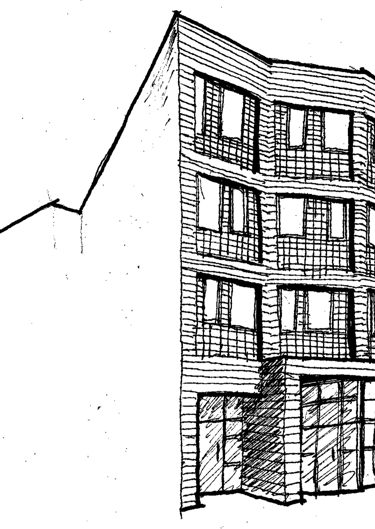
Multiple units arranged vertically in a single structure
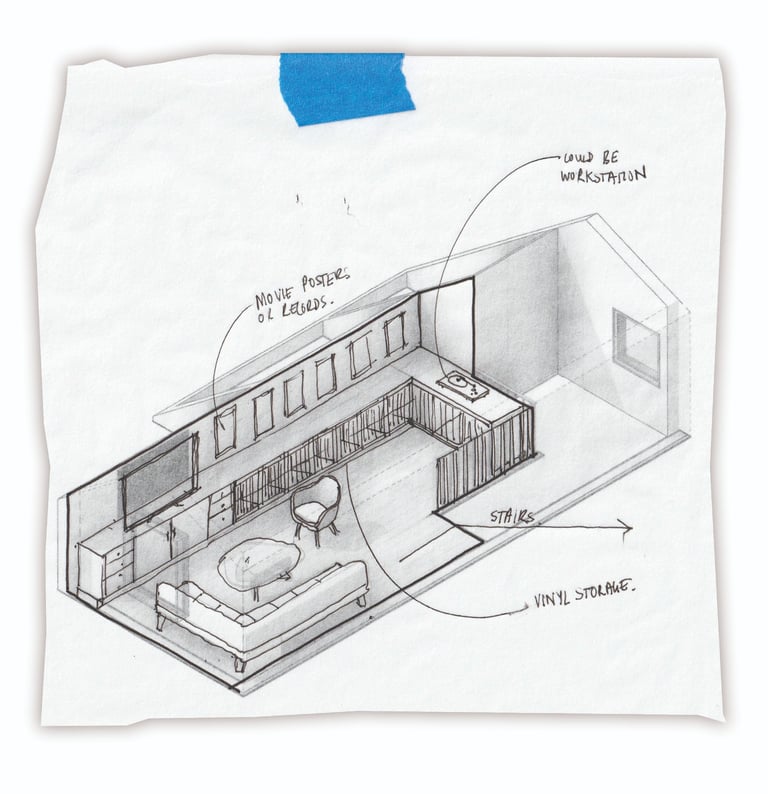
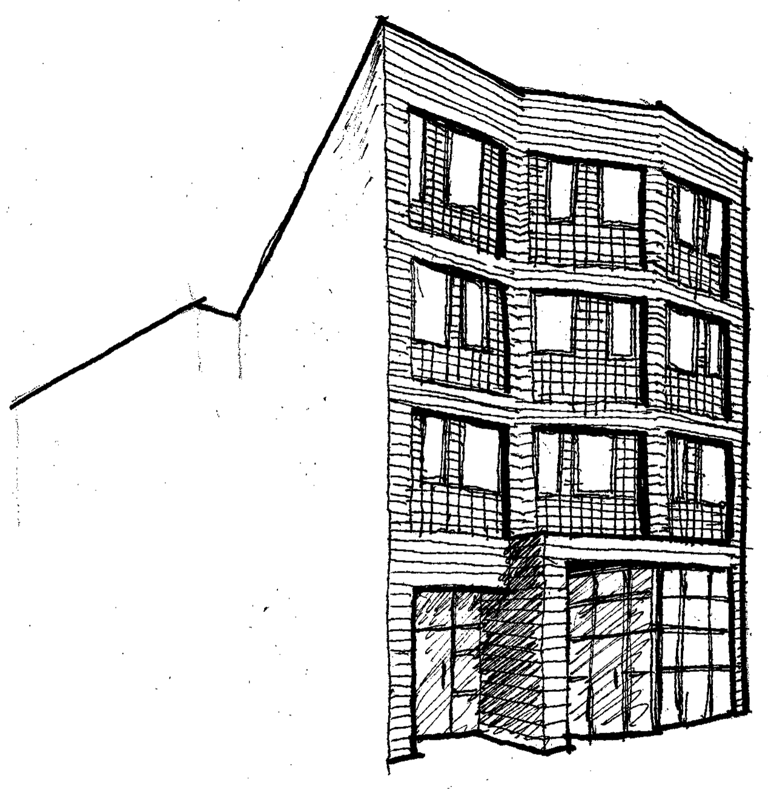
Stacked flats are being incentivized in the new zoning code because they are the most spatially efficient way to deliver density on a single lot, while also helping offset the significant constraints imposed by current Building Code interpretation.
Although recent zoning changes have improved their feasibility, stacked flats are still treated as commercial construction under the IBC, triggering higher requirements for egress, fire protection, and energy performance. These code-driven burdens are unlikely to change in the near term, as they are governed at the national level rather than through local zoning policy.
Density:
Stacked Flats: Up to 1 unit per 600 SF of Lot Area
Stacked Flats meeting certain green criteria: Up to 1 unit per 500 SF
Other Units: Up to 1 unit per 1250 SF of Lot Area
On a 5000 SF lot, stacked flats allow 8-10 units, while other dwelling arrangements are limited to 4 units.
Height
Stacked Flats meeting certain green criteria: Up to 42 feet
Other Units: Up to 32 feet
Floor Area Ratio (FAR)
Additional 0.2 to 0.4 FAR beyond other dwelling unit types
See FAR section for details
Lot Coverage
Stacked Flats: Up to 60% of lot area
Other Units: Up to 50% of lot area
TYPE A UNITS
Accessibility-ready housing
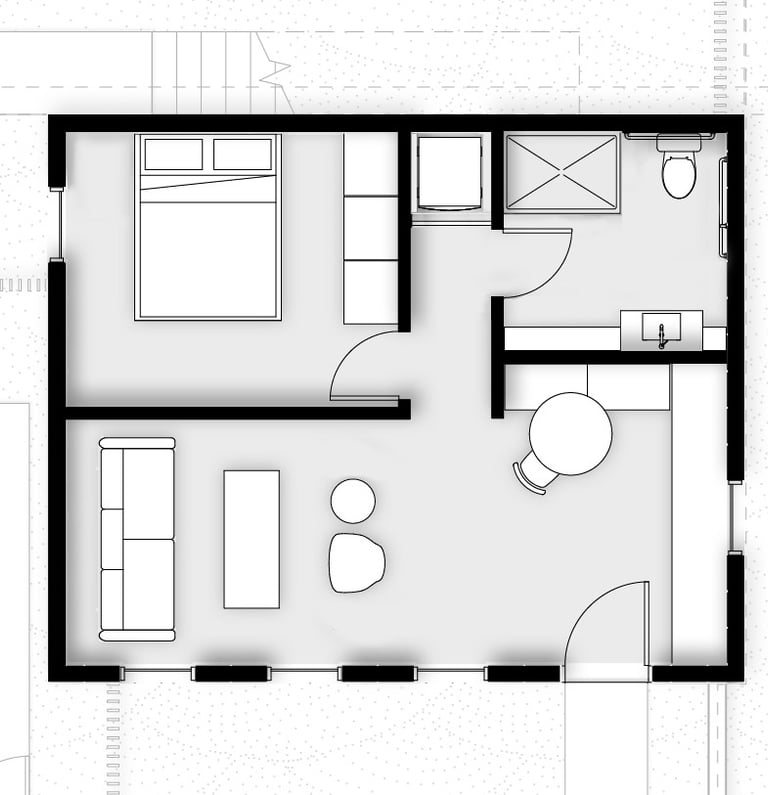
Type A dwelling units are designed to accommodate future accessibility without structural work. They include additional layout clearances that support wheelchair access, reinforced walls for future grab bars, and adaptable fixtures.
The new zoning code incentivizes developers to provide these accessibility-ready units by granting the following exemptions:
Exempt from FAR calculations
Exempt from density calculations
Exempt from lot coverage calculations, including any floor area located above or below a Type A unit
WHAT'S COMING NEXT
How Seattle’s zoning code is expected to evolve beyond Phase One
Seattle’s One Seattle Plan began in early 2022 as a comprehensive update to the city’s approach to growth. It laid out a long-term vision to add more housing in walkable, transit-connected areas by expanding neighborhood centers and introducing a wider mix of housing types, including fourplexes, townhouses, and stacked flats. The plan aimed to guide that growth in a way that supports affordability, livability, and neighborhood-scale density.
In 2023, that local planning effort intersected with House Bill 1110, a statewide mandate requiring cities to allow middle housing in areas historically zoned for single-family use. The law’s deadline compressed Seattle’s timeline and pushed the City toward faster adoption.
To stay in compliance while the comprehensive plan was still under review, the City adopted interim zoning legislation as a short-term bridge. This step preserved local control and gave the City Council time to complete hearings and assemble a permanent zoning package.
The result is Phase One zoning legislation, which defines the rules now in effect and the standards described on this page.
Phase One establishes how middle housing functions in Neighborhood Residential zones and sets the core development mechanics that shape feasibility, including allowed housing types, density, height, lot coverage, setbacks, and tree requirements.
Phase Two implements the growth strategy outlined in the Comprehensive Plan. It updates zoning in new and expanded Neighborhood Centers, Regional and Urban Centers, and along frequent transit corridors, aligning development capacity with transit access, infrastructure, and planned services. These changes will shape where new housing concentrates, how centers evolve, and how growth is distributed across the city.
Phase Two zoning legislation is now moving forward alongside adoption of the Comprehensive Plan. City Council review and public hearings are underway, and these decisions will translate long-range planning goals into location-specific zoning changes across the city.
The City has published a draft zoning map showing proposed changes citywide, along with district-level materials that break down how those changes apply by area.
(Disclaimer: This summary is intended as a general reference only. Zoning regulations are highly site specific and there may be other parameters not listed here that apply to your lot. We recommend working with an experienced architect to flag constraints and identify opportunities. You can schedule a free 15-minute consultation to discuss the possibilities for your site below.)